Hello, hello; today December 24th, christmas eve!!!!!!
lunes, 24 de diciembre de 2012

lunes, 3 de diciembre de 2012
martes, 27 de noviembre de 2012
viernes, 23 de noviembre de 2012
miércoles, 21 de noviembre de 2012
400!!!!!!
In the blog of diverscience we enter 400 persons!!!!!!!!!
Is fantastic!!!!!!
Thank you for enter in DIVER SCIENCE
CONGRATULATIONS!!!!!
Is fantastic!!!!!!
Thank you for enter in DIVER SCIENCE
CONGRATULATIONS!!!!!
miércoles, 14 de noviembre de 2012
PUBLICITY
GO TO www.englishpitingli.blogspot.com is very funny their blog is for english.
VISIT THEM !!!!!!
VISIT THEM !!!!!!
miércoles, 7 de noviembre de 2012
VERTEBRATES
Vertebrates are the group of animals that have a spinal column and skeleton.
Vertebrates is divided in 5 groups: fish,birds,reptiles,amphibians and mammals.
Fish are the largest group of vertebrates.They live in water.Fish live in salt water, rivers, lakes or oceans.Most fish lay eggs.Fish take oxigen of water through their gills.Fish have fins and a tail,with them swim..Their body is covered with scales,with protect them.
Birds live on land and have 2 wings., bird´s body is covered with feathers.Birds do not have teeth: they have a beak. Some birds can swim; their feet are specially.Birds are oviparus.
Reptiles breathe through their lungs.All reptiles have thick, hard scales covering their body.Some reptiles have 4 short legs.they move to one place to another by crawling.Other reptilesdo not have any legs.They move by slithering.
Amphibians live part of their life in water, and part of the land.When they are young live in water and breath through their skin and gills.When they become adults they live on land and breathe through their lungs. An amphibian`s skin is moist.They have 4 legs.Amphibians are oviparus.When their are babies look different from their parents.As they grow,their body changes, these changes are cold metamorphosis.
martes, 6 de noviembre de 2012


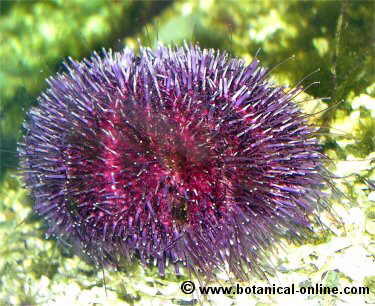

invertebrates
Invertebrates is the group of animals that not have spinal column, and skeleton.
Invertebrates is divided in 6 groups: arthropods, molluscs, worms, echinoderms,sponges
and cnidarians.
Arthopods are divided in: insects, arachnids, crustaceans and myriapods.
Their body is divided in three main parts: head, thorax and abdomen.
Molluscs are divided into gastropods bivales and cephalopods.
Molluscs do not have y legs.To move to one place to another,they use a muscular foot.
Wormsdo not have legs, their bodies are long and soft.they are not protected by exoskeletons or shells.Their body divided into rings.
Echinoderms have a definite shape whith hardsplates under their skin.Their can move from one place to another on hundres of small feet.
Cnidarians they live mostlyin the sea and have tentacles.
Sponges live in the water. There are a lot of holes, called pores,in their body.
Invertebrates is divided in 6 groups: arthropods, molluscs, worms, echinoderms,sponges
and cnidarians.
Arthopods are divided in: insects, arachnids, crustaceans and myriapods.
Their body is divided in three main parts: head, thorax and abdomen.
Molluscs are divided into gastropods bivales and cephalopods.
Molluscs do not have y legs.To move to one place to another,they use a muscular foot.
Wormsdo not have legs, their bodies are long and soft.they are not protected by exoskeletons or shells.Their body divided into rings.
Echinoderms have a definite shape whith hardsplates under their skin.Their can move from one place to another on hundres of small feet.
Cnidarians they live mostlyin the sea and have tentacles.
Sponges live in the water. There are a lot of holes, called pores,in their body.
miércoles, 31 de octubre de 2012
the parts of the cell
the main parts of an animal cell are: membrane, cytoplasm and nucleus.
Membrane serves to protect the cell.
Cytoplasm serves as an internal enviroment of the cell.
Nucleus is the centre of the cell, nucleus act as an orchestra contuctor for every cell fuctions
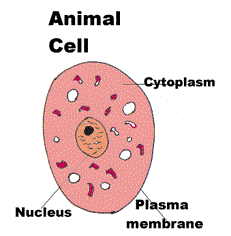
Membrane serves to protect the cell.
Cytoplasm serves as an internal enviroment of the cell.
Nucleus is the centre of the cell, nucleus act as an orchestra contuctor for every cell fuctions
lunes, 29 de octubre de 2012
The circulatory system
 The circulatory system is an organ system that passes nutrients, gases, hormones, blood cells etc. to and from cells in the body to help fight deseases, stabilize body temperature and pH and homeostasis.
jueves, 25 de octubre de 2012
Let´s breath
Part 1
Part 2
Part 3
miércoles, 24 de octubre de 2012
martes, 23 de octubre de 2012
Exploring the digestive system
This is an image of the human colon (large bowel) obtained with an endoscope

lunes, 22 de octubre de 2012
WELLCOME!!!!!!
Welcome to the science blog of 5th-C course of Salesianos Atocha school. We will talk about the enviroment, the animals,the parts of the body, and a lot of interestings and funny facts releted to scientific world.
See you soon!!!!!
THE HEART
The heart is the most important organ of the circulatory sistem.The heart is like a big pump that ejects the blood through everywhere into the body , everytime that it beats .
This is the way how the organs get nutrients and oxigen. The heart has arteries to get its own nutrients and oxigen too.
 firmado:5ºC
Suscribirse a:
Comentarios (Atom)